
Tooth pain can be one of the most uncomfortable experiences, often affecting your daily routine, eating habits, and overall well-being. One of the most effective treatments to relieve severe tooth pain and save your natural tooth is root canal treatment.
Many people fear root canals due to common myths, but modern dentistry has made this procedure safe, comfortable, and virtually painless. In this comprehensive guide, you’ll learn everything about root canal treatment, including its benefits, procedure, cost, and aftercare.
What is Root Canal Treatment?
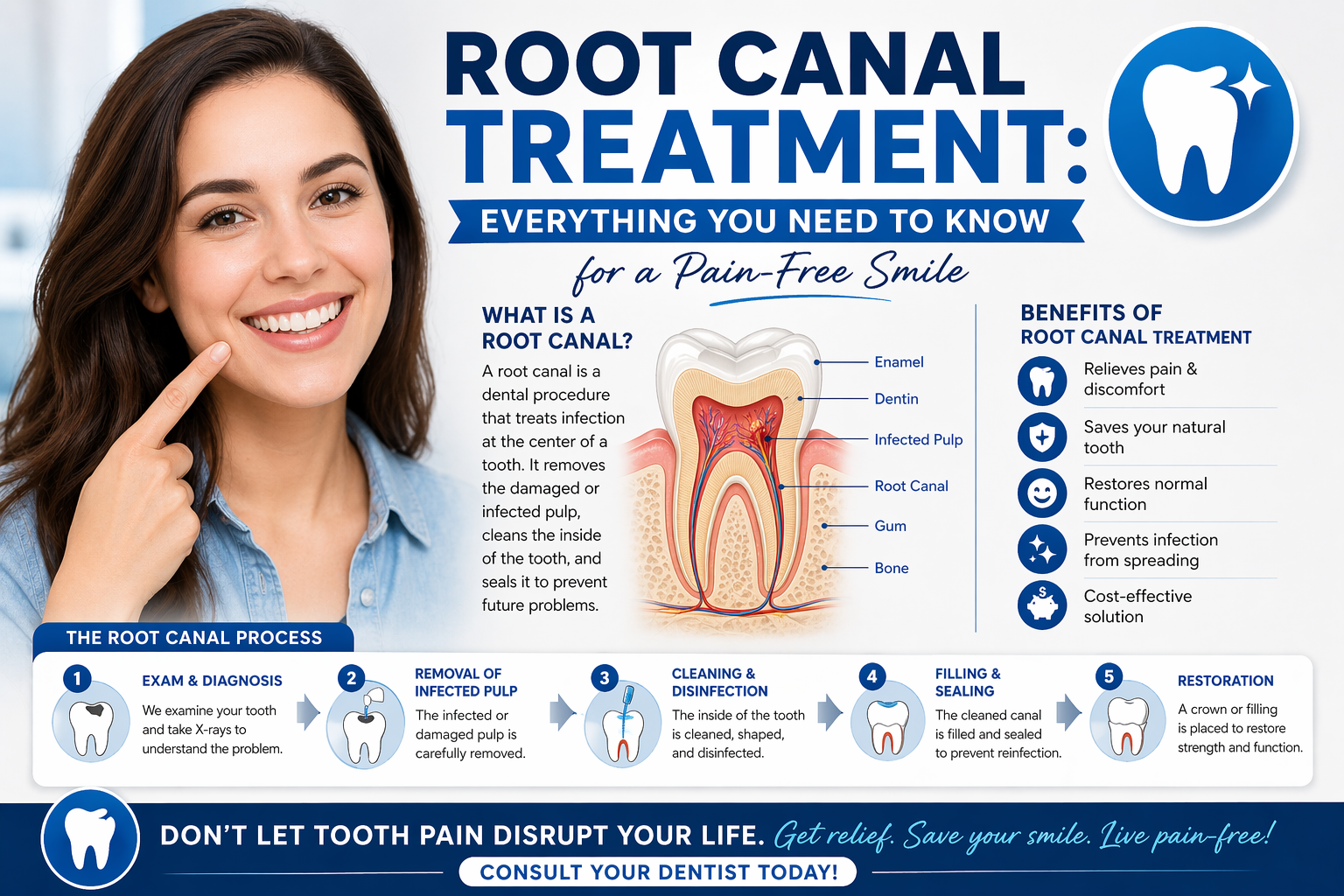
Root canal treatment is a dental procedure used to remove infection from inside the tooth. The inner part of the tooth, known as the pulp, contains nerves and blood vessels. When this pulp becomes infected due to decay, cracks, or injury, it can cause severe pain and swelling.
During a root canal, the infected pulp is removed, the inside of the tooth is cleaned and disinfected, and then sealed to prevent further infection.
Signs You May Need a Root Canal
You may require root canal treatment if you experience:
- Severe tooth pain while chewing
- Sensitivity to hot or cold that lingers
- Swollen or tender gums
- Darkening of the tooth
- Pimple-like swelling on the gums
Ignoring these symptoms can lead to worsening infection and even tooth loss.
Benefits of Root Canal Treatment
1. Relieves Pain
Root canal treatment removes the source of infection, providing immediate relief from severe toothache.
2. Saves Natural Tooth
Instead of extracting the tooth, this procedure preserves your natural tooth structure.
3. Prevents Infection Spread
It stops bacteria from spreading to nearby teeth and gums.
4. Restores Functionality
After treatment, you can chew and bite normally without discomfort.
5. Improves Oral Health
Eliminating infection improves overall dental health and hygiene.
Root Canal Procedure (Step-by-Step)
Step 1: Examination & Diagnosis
Your dentist will examine the tooth and take X-rays to determine the extent of infection.
Step 2: Local Anesthesia
The area is numbed to ensure a painless procedure.
Step 3: Removing Infected Pulp
The dentist creates a small opening and removes the infected pulp from inside the tooth.
Step 4: Cleaning & Disinfection
The root canals are thoroughly cleaned and disinfected to remove bacteria.
Step 5: Filling & Sealing
The canals are filled with a special material and sealed to prevent reinfection.
Step 6: Crown Placement
A crown is usually placed to restore strength and protect the tooth.
How Long Does the Procedure Take?
Root canal treatment typically requires 1–2 visits, depending on the severity of the infection.
Is Root Canal Painful?
Modern root canal treatment is virtually painless thanks to advanced techniques and anesthesia. Most patients report that it feels similar to getting a dental filling.
Cost of Root Canal Treatment
The cost can vary depending on:
- Tooth location (front or molar)
- Severity of infection
- Need for crown placement
While the initial cost may vary, root canal treatment is often more affordable than tooth extraction followed by replacement options.
Aftercare Tips
To ensure proper healing:
- Avoid chewing on the treated tooth until fully restored
- Brush and floss regularly
- Take prescribed medications
- Visit your dentist for follow-up care
Common Myths About Root Canal
Myth 1: Root canal is painful
Fact: It relieves pain, not causes it
Myth 2: Tooth extraction is better
Fact: Saving your natural tooth is always preferable
Myth 3: Root canal causes illness
Fact: This is completely false and not supported by science
Conclusion
Root canal treatment is a safe, effective, and painless way to save your natural tooth and eliminate infection. With modern dental technology, the procedure is quick, comfortable, and highly successful.
If you’re experiencing tooth pain or signs of infection, don’t delay treatment. Early intervention can save your tooth and prevent complications.