Nobody wakes up and thinks, “today’s the day I see an orthodontist.” It creeps up on you. A front tooth has wandered a little. You catch your crowded teeth in a group photo and wince. Or food keeps jamming into the same two gaps and you’ve had enough. Next thing you know, you’re googling straightening teeth as an adult at 11 pm.
So, clear aligners vs braces? Both are solid teeth straightening options, and both can leave you with a smile you like. They just fit different mouths and different lives, so the right pick depends on your own dental needs. Here’s how each one works, where they’re different, and what to think about before you choose.
What Are Clear Aligners?
Clear aligners, which people also call invisible aligners, are clear plastic trays that sit over your teeth. Picture a set of slightly different mouthguards, only thinner and made just for you. You wear one set, move on to the next, and your teeth shift bit by bit. That slow teeth movement is the whole idea.
And yes, they’re removable aligners. That’s what wins most people over. Take them out for dinner, for brushing, for that big meeting. Plenty of adults go for aligners for teeth that only need a gentle nudge, partly because hardly anyone notices them.
How Clear Aligner Treatment Works
Clear aligner treatment starts with a proper check of your teeth, gums and bite. Your dentist or orthodontist plans the whole route, from where your teeth sit now to where they should end up. You get a run of trays and swap to the next one when you’re told to.
You’ll still go for check-ups, just usually fewer than with braces. They let your dental professional see that things are moving the way they planned.
Why Wearing Them as Instructed Matters
Here’s the catch. Aligners only do their job while they’re in your mouth, so that means most of the day, as your dental professional tells you. If they live in the case, your teeth fall behind the tray. The next one fits badly and the whole thing takes longer.
Be honest with yourself. Would you leave yours wrapped in a napkin at lunch? If the answer is yes, that’s worth knowing now.
What Are Traditional Braces?
Traditional braces are the ones you remember from school. They’re fixed orthodontic appliances, stuck to your teeth and working all day and all night. A small bracket goes on each tooth, a thin wire links them up, and little elastic ties hold the wire in place.
Brackets, Wires and Adjustment Visits
That wire pushes gently and your teeth slowly follow. Every few weeks your orthodontist tightens things up. Sometimes they swap the wire or add small elastics to fine-tune the bite. You don’t have to remember anything, because braces just get on with it.
Metal Braces and Ceramic Braces
Dental braces come in a couple of styles. Metal braces are the classic steel ones, tough and common. Ceramic braces use tooth-coloured brackets, so they blend in more, though they’re still stuck to your teeth.
Why Braces Are Still So Common
Traditional braces have been around for decades, and that’s no accident. Orthodontists get a lot of control over each tooth, which is why braces remain a commonly used orthodontic treatment, even for tricky cases.
Clear Aligners vs Braces: Key Differences
Let’s put them side by side. Both can improve teeth alignment, but day to day they feel very different.
1. Appearance
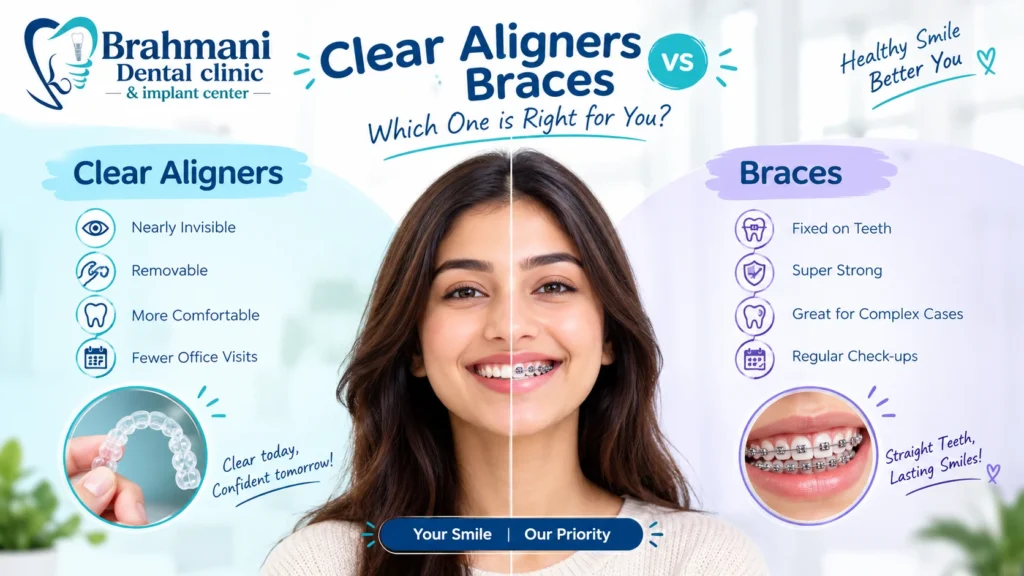
Clear aligners are nearly see-through, so they suit people who’d rather not make a thing of their treatment. Metal braces are hard to miss. Ceramic ones are subtler, but you can still see brackets and a wire.
2. Removability
Aligners come out. Braces don’t. That one difference changes almost everything else, from what you eat to how long you stand at the bathroom sink.
3. Oral Hygiene
With aligners, you brush and floss like you always have. With fixed braces, plaque loves to hide around the brackets and under the wire, so cleaning takes more time and patience.
4. Eating Habits
Aligners come out for meals, so there’s usually no list of banned foods. You do need to brush before they go back in. With braces, you’ll be told to go easy on hard, sticky or chewy stuff that can snap a wire or knock a bracket loose.
5. Comfort
Both can feel sore for a few days after a new tray or an adjustment. Aligners have no brackets or wires, so some people find them smoother. Braces can rub your cheeks or lips now and then. A comfortable orthodontic treatment comes down to a good fit and proper follow-up, and everyone reacts a bit differently.
6. Treatment Convenience
Aligner patients often need fewer visits, since the trays are made ahead of time. Braces mean regular adjustment appointments. How easily you can get to the clinic might sway you.
7. Suitability for Different Concerns
Mild to moderate crowding or spacing may respond well to aligners. More complex cases can need the extra control that braces give. Only an examination can tell which group your teeth fall into.
8. Lifestyle and Compliance
Aligners reward people who are organised and consistent. Braces suit people who’d rather not manage anything day to day.
Clear Aligners vs Traditional Braces: Which Is More Convenient?
With clear aligners vs traditional braces, it depends on how you live. If you give talks, play a wind instrument or just can’t picture a mouth full of metal, removable trays can feel like a gift. Take them out for the occasion, pop them back in after, and your brushing routine stays the same.
Traditional braces ask for no daily decisions, though. They stay put and keep working while you get on with your day. The trade-off is a more careful cleaning routine and a few foods to skip. Neither is more convenient for everyone. In the clear aligners vs braces debate, the better fit is the one that matches your habits.
Which Option Is Better for Oral Hygiene?
Good oral hygiene matters with any appliance. Crooked teeth are already harder to clean, and moving teeth can trap plaque if you slack off.
With removable aligners, you take the trays out and brush and floss as normal. Clean the trays too, and brush before putting them back, or food and bacteria end up sealed against your teeth.
Fixed braces are fussier. You have to clean around every bracket and under the wire, and many people use interdental brushes, floss threaders or a water flosser. It takes extra effort, but patients who stay consistent keep their teeth and gums healthy. Regular dental care visits help, and your dental team can show you the right technique for either option.
Can Clear Aligners Treat the Same Problems as Braces?
Often they can treat many of the same concerns, but not always to the same degree. When people search clear aligners vs braces, they tend to assume one option covers everything. In reality, it depends on your teeth, gums and jaw.
Clear aligners may be suitable for:
- Mild to moderate crowding, where teeth overlap or lack space
- Gaps between teeth, which aligners can often close gradually
- Certain bite problems, such as some mild overbite, underbite or crossbite cases
Severe crowding, big jaw differences or badly rotated teeth may call for braces or another form of orthodontic treatment. Suitability varies from patient to patient, and a dental professional can determine what’s realistic for you.
Who May Benefit from Clear Aligners?
Aligners may appeal to you if:
- You want something discreet for work or social life
- You’d like to eat, brush and floss without working around an appliance
- You can commit to wearing the trays as instructed
- Your concerns are mild to moderate
- You’re an adult or older teen who’s happy to manage your own treatment
If that sounds like you, an assessment can confirm whether this teeth straightening treatment suits your mouth.
Who May Benefit from Braces?
Braces may be the better fit if:
- You have a complex bite problem or significant crowding
- You need precise control over how individual teeth move
- You’d rather not rely on remembering to wear removable trays
- Your orthodontist recommends fixed appliances for your specific case
For patients who need more comprehensive correction, the fixed design is a real advantage, not a nuisance. Of all the teeth straightening options, braces are often the first to be considered for complex corrections.
Clear Aligners vs Braces: Factors to Consider Before Choosing
Before you decide, run through these points honestly:
- Dental condition: The type and severity of misalignment strongly influence what may work.
- Treatment goals: Are you after simple smile improvement, full smile correction, a better bite, or a mix?
- Lifestyle: Think about your job, your hobbies and how visible you want treatment to be.
- Oral hygiene habits: Be honest about how consistently you brush and floss.
- Compliance: Aligners need disciplined wear. Braces don’t.
- Professional recommendation: Your dentist’s advice should carry the most weight.
No single point decides it. Weigh them together and the answer usually gets clearer. Whichever way you lean, comparing orthodontic treatment options with a professional beats guessing from the internet.
Why an Orthodontic Consultation Matters
An orthodontic consultation is the most reliable way to find out what suits you. A dentist or orthodontist can look at your teeth alignment, bite, gums, jaw relationship and overall oral health before recommending anything. If you have gum disease or untreated decay, that may need sorting out first.
A proper assessment may include a visual examination, X-rays and digital scans or impressions. They show how your teeth and jaws fit together, which is something no article on clear aligners vs braces can do for you.
At Brahmani Dental Clinic, patients can talk through their goals, ask questions and understand their choices in plain language before committing to anything. A good consultation also sets realistic expectations, because results and treatment time differ from person to person. Think of it as the first step toward properly aligned teeth. Straightening teeth should improve your dental alignment and your dental health, not just your photos.
Clear Aligners vs Braces: Which Teeth Straightening Option Is Right for You?
There’s no single winner. When matched properly to the right patient and followed properly, both can improve alignment and support long term dental health. Clear aligners offer convenience and removability, while braces provide fixed, all-inclusive control.
So, where does that leave you with clear aligners vs braces? It all depends on your teeth, what you want and your daily routine. The best next step is a professional evaluation and the team at Brahmani Dental Clinic would love to take a look at your teeth, explain your options and help you plan a healthy, confident smile. Book a consultation and receive advice for your mouth, not someone else’s.
Frequently Asked Questions
Not necessarily. Each has strengths, and the better option depends on your condition and preferences. Aligners may suit mild to moderate concerns, while braces can handle a broader range of cases. Your orthodontist can walk you through your orthodontic treatment options.
Clear aligners are clear, removable trays, while dental braces are brackets and wires fixed to your teeth. They differ in looks, cleaning routine, eating habits and the types of problems they can treat.
Often, yes, especially in mild to moderate cases. Whether they can fix your crooked teeth depends on how severe the misalignment is, and a dental professional can tell you after an examination.
Yes, they’re generally removable, which makes eating and cleaning easier. They still need to be worn for the hours your dentist recommends, or treatment won’t go to plan.
Yes. Adults and teenagers both use either kind of teeth straightening treatment. Adults should have their gum health checked first, since healthy gums and supporting bone matter for tooth movement.