You know the tooth. The one you spot in every photo, or the one you’ve been quietly hiding behind a closed-mouth smile. Maybe there’s a small gap, a chip from biting something way too hard, or a front tooth that just doesn’t match its neighbour. That’s usually when people start reading up on cosmetic dental treatment.
Dental veneers come up a lot in that search. They can change how certain teeth look, but they’re not a fix for every dental problem, and they’re not for everybody. Before anyone recommends anything, a dentist should look at your teeth and gums properly, because something that seems purely cosmetic can have a different cause underneath.
So here’s what veneers can realistically do about gaps, chips and uneven shapes, and what to ask when you book.
What Are Dental Veneers?
A veneer is a thin, tooth-shaped shell that gets bonded onto the front of a tooth. It covers the part everyone sees when you smile. Teeth veneers can change a tooth’s shape, size and colour, and they can hide certain minor tooth imperfections too.
Most are made from porcelain or composite resin. Both are common in cosmetic dentistry, and we’ll get to how they differ in a minute.
Placing a veneer is a cosmetic dental procedure, so one step has to come first: a proper dental evaluation. The veneer sits on the surface, which means the tooth underneath, and the gum around it, need to be healthy.
Can Dental Veneers Fix Gaps Between Teeth?
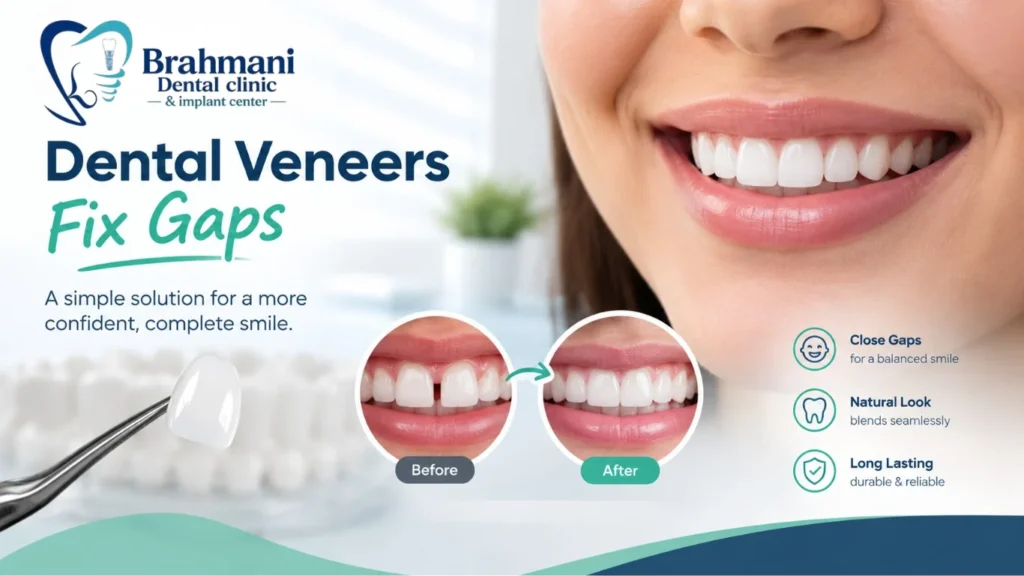
Sometimes. With a small gap, dental veneers for gaps can make the teeth a touch wider so the space disappears. You close small gaps without moving anything, and for a lot of people with tooth gaps that’s exactly what they were after.
Cosmetic Closure vs Orthodontic Correction
There’s a big difference between hiding a gap and fixing it. A veneer changes how the tooth looks, while orthodontic treatment moves the tooth. If your gaps between teeth come from the way the teeth sit or the way you bite, covering them might not touch the real cause.
Bigger or more awkward tooth gaps usually do better with teeth straightening first. Veneers might come after that, or not at all.
Why the Cause and Size of the Gap Matter
One tiny gap between the two front teeth is a different story from spaces all along the smile. Your dentist will ask why the gap is there, how wide it is, and what your gums and bite are doing.
They’ll check gum health and tooth position first. Put veneers over unhealthy gums or poorly placed teeth and you may not love the result. That check is what tells you whether veneers for teeth like yours are worth considering.
Can Veneers Fix Chipped Teeth?
Often, yes. Veneers for chipped teeth are mostly used on the front teeth, where a chip is hard to miss. The veneer covers the damaged edge and gives you an even-looking tooth shape again, which makes it a popular kind of chipped tooth repair.
What matters most is how much of your own tooth is left. A small chip? A veneer might work nicely. A deep crack, a badly broken tooth or one that’s weak? That could need another dental treatment first, like a filling or a crown, to rebuild it.
Either way, your dentist has to look at the tooth before saying yes. A dental veneer treatment plan only makes sense when the tooth underneath is sound.
Can Veneers Improve Uneven Tooth Shapes?
Veneers can change the shape and proportions of certain teeth. Maybe your front teeth look a bit irregular, too short, slightly pointed or a different tooth size from each other. Veneers for uneven teeth can even that out. An uneven tooth shape that bugs you in photos is one of the top reasons people ask about them.
Dentists often plan this as smile design, which just means looking at the shape, length and size of each tooth so the whole smile looks balanced on your face.
Position is another matter. If teeth are badly rotated or crowded, orthodontic treatment is likely the better route, since a veneer can’t move a tooth.
What Other Cosmetic Concerns Can Dental Veneers Address?
Beyond gaps, chips and shapes, veneers may help with:
- Certain kinds of tooth discoloration, especially stains that don’t budge with whitening
- Minor shape irregularities, including a slightly uneven tooth shape
- Small cosmetic imperfections
- Uneven-looking front teeth
- Smile symmetry and general smile aesthetics, such as one side looking different from the other
They can’t fix everything, though. Some discolouration starts inside the tooth and needs a different approach, and veneers don’t solve every dental problem.
From a dental aesthetics point of view, the aim is usually a natural-looking smile that suits your face. For some people that’s modest smile improvement. For others it’s a bigger smile makeover. Your dentist can tell you what’s realistic for your teeth.
Dental Veneers vs Other Treatment Options
There’s no single “best” here, because each treatment solves a different problem:
- Dental bonding: Tooth-coloured resin is shaped right onto the tooth. It’s often used for small chips or minor gaps.
- Orthodontic treatment: Braces or aligners move teeth into better positions. If your main worry is tooth alignment, this goes after the cause, not just the look.
- Teeth straightening: This is the wider goal of orthodontics, and it may need to happen before any cosmetic work.
- Dental crowns: A crown covers the whole tooth, which can suit teeth that are badly damaged or weak, where it’s clinically appropriate.
Sometimes smile improvement takes a mix, like braces first and veneers after, and a full smile makeover can combine several. Your dentist can explain which mix fits you.
Porcelain Veneers vs Composite Veneers
Both kinds of teeth veneers count as cosmetic veneers, but they behave quite differently.
- Material: Porcelain veneers are ceramic. Composite veneers are tooth-coloured resin.
- Appearance: Porcelain is often picked for how closely it can copy natural enamel. Composite can look great too, though a lot depends on the dentist’s skill and shading.
- Application: Porcelain veneers are usually made in a lab, so expect more than one visit. Composite veneers are generally built up right on the tooth, often in a single visit.
- Durability: Porcelain tends to resist stains well. Composite may stain or wear more over time. Neither is indestructible.
- Maintenance: Composite can often be polished or repaired more easily, while a chipped porcelain veneer may need replacing.
Porcelain usually needs some tooth preparation, where a little enamel is removed so the veneer sits flush. Composite may need less, or none, depending on the case. Enamel doesn’t grow back, so it’s worth talking this through properly with your dentist.
Who May Be a Good Candidate for Dental Veneers?
Veneers for teeth like yours may be suitable when you have:
- Healthy teeth
- Healthy gums
- Good oral hygiene
- Cosmetic concerns about tooth shape or tooth appearance
- Realistic expectations
- Enough natural tooth structure
- No untreated major dental disease
A qualified dentist has to decide whether that’s you. Cosmetic veneers work best on a healthy foundation, and your overall oral health matters as much as how the teeth look.
When Veneers May Not Be the Right Option
Another treatment may suit you better if any of these sound familiar:
- Severe tooth decay
- Significant gum disease
- Major tooth damage
- Certain bite problems
- Severe tooth misalignment
- Not enough tooth structure
- Untreated oral health problems
Often, restorative dentistry has to come first. That could be a filling, gum treatment or a crown, which counts as dental restoration, before anyone thinks about cosmetic dentistry. This list isn’t a diagnosis. It’s just a reminder of why the examination matters.
What to Expect During a Dental Veneer Consultation
A consultation is mostly a chat plus a careful look. It usually runs like this:
- Dental examination. The dentist checks your teeth, gums and general oral health.
- Your cosmetic concerns. You say what bothers you about your smile.
- Teeth and gums assessment. This shows whether the foundations are healthy.
- Bite and tooth alignment. The dentist looks at how your teeth meet and line up.
- Treatment goals. You talk about what you’d like to change.
- Veneers or something else. The dentist explains whether veneers or another treatment may be appropriate.
- A personalized treatment plan. If you go ahead with dental veneer treatment, the approach is built around your teeth.
At Brahmani Dental Clinic, you’re welcome to bring a list of questions, because a consultation is the right time to ask them.
How to Care for Teeth After Veneer Treatment
Veneers need looking after, and so do the natural teeth around them. A few easy habits go a long way:
- Brush regularly with a soft toothbrush
- Floss daily, especially around the edges of the veneers
- Keep up routine dental check-ups
- Skip habits that can damage teeth, like chewing ice or pens, biting nails or opening packets with your teeth
- Maintain good oral hygiene overall
- Follow your dentist’s recommendations
Nobody can promise how long a veneer will last. It depends on the material, your habits and your oral health. Keep your check-ups, because small problems are much easier to sort out early.
Why Professional Evaluation Matters Before Choosing Veneers
Seeing a great veneer photo online is tempting. But a photo tells you nothing about someone’s gums, how their teeth bite together, or how much natural tooth they have left. Good dental aesthetics is about more than a picture.
A proper evaluation covers tooth health, gum health, bite, tooth structure, alignment and your own goals. At Brahmani Dental Clinic, patients can talk through their concerns, get their teeth and gums checked and hear honest advice on whether veneers are a sensible option before deciding anything.
Can Dental Veneers Fix Gaps, Chipped Teeth and Uneven Tooth Shapes?
Think of it this way. Veneers may improve how certain gaps, chipped teeth and uneven tooth shapes look. They’re a cosmetic fix, so they deal with appearance, not with why a tooth looks that way, and they won’t sort out every dental or orthodontic problem.
Only an examination can say whether they make sense for you, and your dentist can tell you what’s realistic.
Frequently Asked Questions
For certain small gaps, yes. Dental veneers for gaps make the visible tooth surface wider so the space looks closed. They don’t move teeth, though, so bigger spaces or gaps linked to the bite may need orthodontic treatment first. Your dentist can look at your gap and tell you whether veneers may suit it.
Often, and veneers for chipped teeth work best on smaller chips at the front. The veneer covers the chipped edge and evens out the look. If the tooth is badly broken or weak, you might need a filling or crown to rebuild it first. Your dentist checks how much healthy tooth is left before deciding.
To a degree, yes. Veneers for uneven teeth can adjust the shape, length and proportions of selected teeth so they look more balanced. They’re best for slight irregularities. If the real issue is where the teeth sit, orthodontic treatment may suit you better, and your dentist can say which way to go.
Not for everybody. Porcelain veneers are often chosen for their natural look and stain resistance, while composite veneers can usually go on in one visit and be repaired more easily. Which one suits you depends on your teeth, your goals and your habits, so it’s a good thing to raise at your consultation.
No. Veneers need healthy teeth, healthy gums and enough natural tooth structure. If you have untreated decay, gum disease, major damage or certain bite problems, those may need treating first. Only a qualified dentist can decide after an examination, based on your teeth and what you hope to change.